Stage 5: Fill Volume and Dispenser Flow
Measured with a graduated vessel and a stopwatch, because cube size is an opinion and fill volume is a number — and because the split tells you where to look.
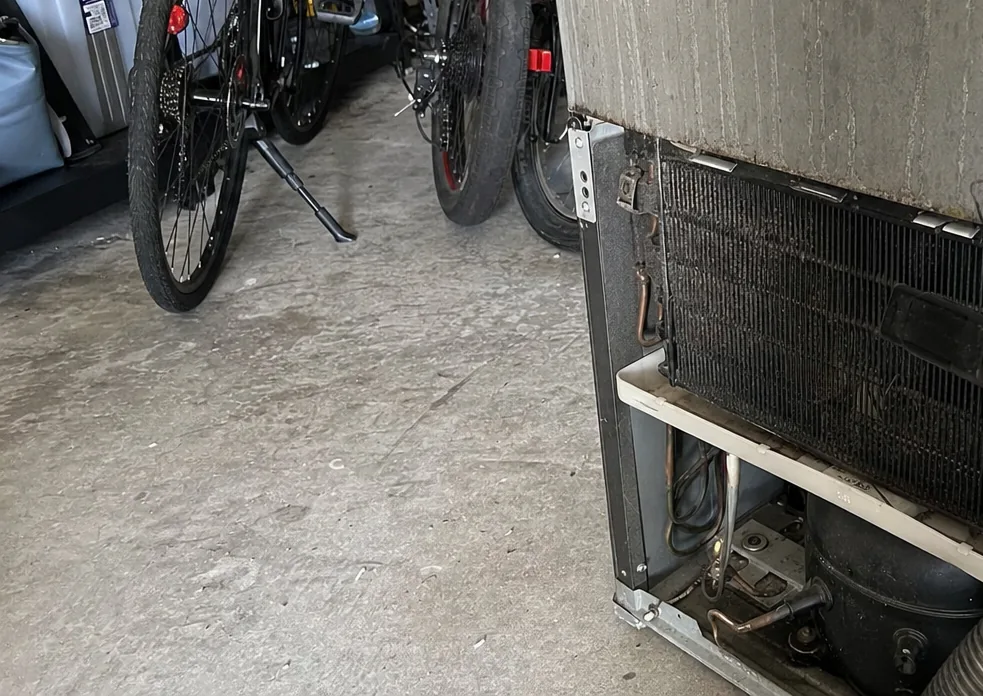
This is the only stage of the six that does not apply to every cabinet. A wine unit has no water connection. A refrigerator column without a dispenser or an ice maker has none either. If your unit is not plumbed, nothing on this page describes it, and any diagnosis that blames the water side on such a cabinet is wrong before it starts.
For everything that is plumbed, this stage is a measurement, not an inspection.
Why a fill valve is measured rather than judged
A fill valve meters by time, not by volume. It opens for a fixed interval and passes whatever the pressure and the orifice allow, then closes whether the mold is full or not. That single design fact governs the whole stage: anything that restricts flow upstream of the valve produces an underfilled mold, and an underfilled mold produces small cubes, then hollow ones, then cubes that will not release cleanly — with nothing having failed in the ice maker at all.
Cube size is therefore a symptom, not a diagnosis. So we take a timed fill into a graduated vessel and compare it against what that fill should be. That turns an argument about whether the ice looks smaller into a number.
The split is the useful measurement
The second reading is dispensed volume over a timed run, and the comparison between the two is what saves the visit:
- Ice and dispensed water both weak. The restriction sits upstream of the point where the line splits — the filter, the valve feed, the supply shutoff, or the line itself.
- Only one side weak. The restriction sits downstream of the split, in that branch alone.
That comparison halves the investigation before a part is touched, and it costs nothing but the time to take it.
Where restriction actually comes from
The filter is first, because it is easiest and cheapest to eliminate. A cartridge is rated in gallons, and the month figure on the box is an estimate of how long an average household takes to reach that gallon figure. What matters is what it is passing now, not what the label says — so we measure through it, and where a fresh cartridge restores flow, the question is answered in five minutes and costs a filter rather than a service call.
Then the supply. A shutoff partly closed during a plumbing visit, a saddle connection that has never been turned, or a line kinked behind the cabinet when it was last pulled out will all produce exactly the symptom pattern of a failing valve. On an older installation, the line and the shutoff are as much a part of the diagnosis as anything inside the appliance.
Then the valve itself. Where a valve has been throttling for a long time, it often will not seal cleanly again once it is cleaned, and it is replaced with a genuine OEM part. The estimate says which of those two we are proposing.
The impostor worth knowing about
A freezer compartment running a few degrees warm produces small, cloudy, poorly formed ice and a slow harvest — the same complaint list as a restricted fill, from a completely different cause. It is one of the most common confusions in this trade, and it is why stage four comes before stage five rather than after it. We would much rather tell you the compartment is running warm than sell you a valve.
Units that stand idle
A bar or cabana ice maker used in bursts behaves differently from a kitchen unit run daily. Water left standing in a fill line between uses evaporates slowly at the mold, so a unit run three weekends a month can look worse after two years than a daily unit does after five. If you close a house or a bar for part of the year, shut off the supply, run the mold empty, and clear the bin — old ice sublimates, fuses into a block, and is the usual reason a harvest stalls on the first cycle after a return.
Terms
The diagnostic is $80 flat, credited toward the repair, with a written estimate before any part is ordered. We are an independent company servicing Sub-Zero refrigeration only, and repairs carry 90 days on labor and 365 days on parts.
What does a repair found at this stage cost in Nocatee?
$80 flat to diagnose, credited toward the repair once you approve it. Completed work on this page has landed between $240 and $650, parts and labor together. The firm figure is written down after the diagnosis, not before it.
| Repair | Typical range |
|---|---|
| Diagnostic visit, credited toward the repair | $80 |
| Ice maker, water valve or supply line | $240–$650 |
Ranges are what this work has cost, not a quote. A range moves with the part version the serial number calls for and with what the cabinet turns out to need. The whole table is on the pricing page.
How much does a repair found at this stage cost in Nocatee?
$80 flat to diagnose, credited toward the work. Completed repairs in this category have run $240 to $650, parts and labor together. The band your cabinet lands in is written into the estimate before anything is ordered.
When is the cabinet not worth repairing?
When the part is discontinued, when the lead time is longer than you can live with, or when the figure is a large fraction of a replacement. A sealed-system repair runs $910–$2,270, and the estimate says plainly when that is the wrong side of the comparison.
Is the $80 charged on top of the repair?
No. Credited toward the repair if you go ahead with the work. It covers the visit and all 6 stages, whichever stage the fault turns out to sit at, and there is no separate call-out charge and no hourly rate running beside it.
$80 flat to diagnose, credited toward the repair if you go ahead with the work. 90 days on labor, 365 days on parts. Pricing · Warranty · Contact